
Requirement review
Application, drawing or reference sample; target quantity and destination market.
TO CONFIRM
A written brief with the open questions identified.
Start with a drawing, reference sample or application brief. We review material, chamber layout and valve placement with you before sampling and production planning.
Bring the available space, required movement and connection details into one development discussion. We help turn the brief into a reviewable air bladder specification.
Share a drawing or reference sample with the installation position, available width and clearance marked.
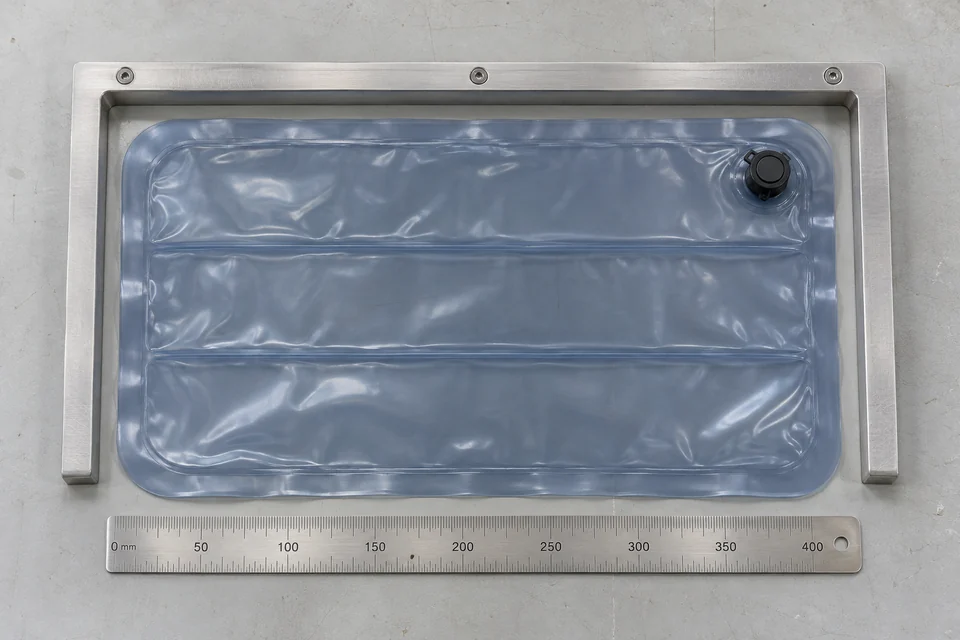
Describe where the bladder needs to support or move, and where the valve and tubing can sit.
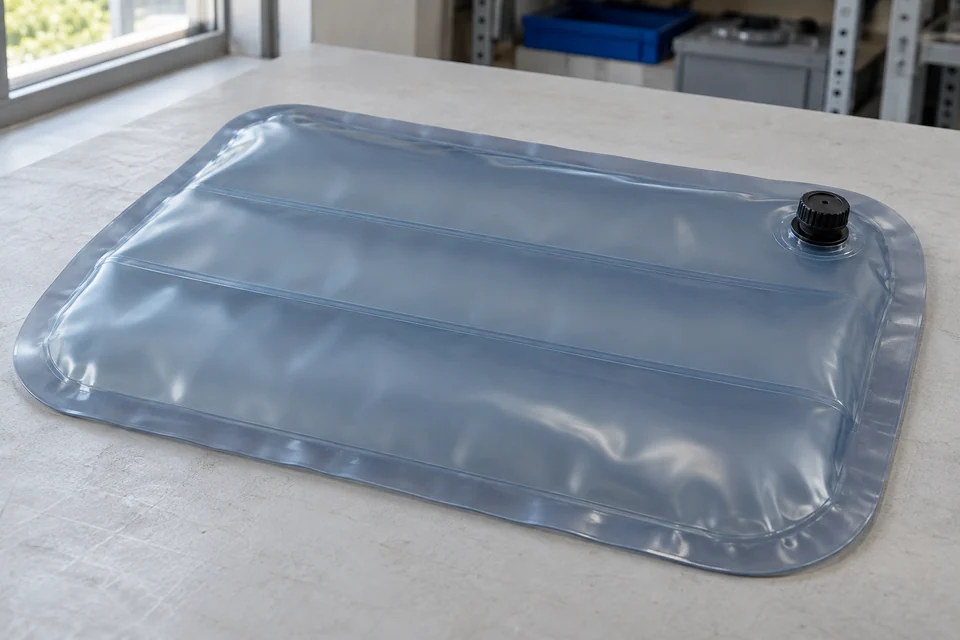
Fit the sample in the assembly and check its movement when inflated and the interface position before agreeing on the production specification.
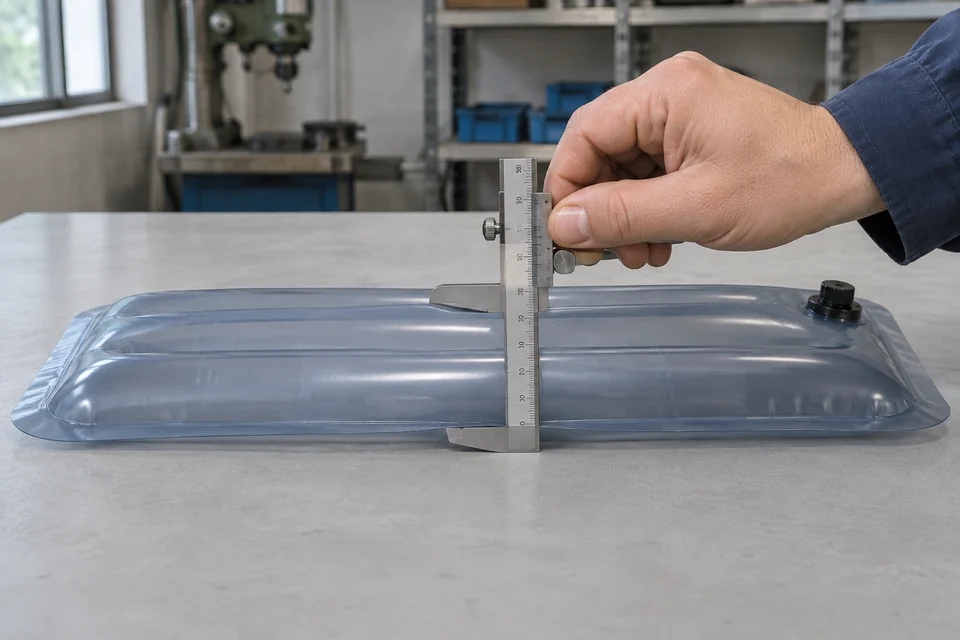
Mark the available space and the dimensions that matter.
Next step Review the specification.
See what to sendShow what the sample already does and what you want to change.
Next step Compare the reference and target.
See what to sendDescribe how the air bladder should fit, inflate and support the product.
Next step Define the missing inputs.
See what to sendDEVELOPMENT & PRODUCTION
Each stage has an input, a review and a result to confirm.
Application, drawing or reference sample; target quantity and destination market.
A written brief with the open questions identified.
Review the shape, air chambers, material direction and inflation connection before agreeing the quotation scope.
Project scope, assumptions and quotation conditions.
Turn the agreed brief into a sample for the checks that matter to the application.
A sample version and a list of items to review.
Collect feedback against the same specification. Record changes and confirm the accepted version.
Approved sample and updated production specification.
Agree materials, quantity, acceptance requirements and relevant inspection points before production release.
Production and inspection records agreed for the order.
Confirm packaging, labels, shipping responsibilities and the documents required for the order.
An agreed packing and delivery arrangement.
Tell us where your order needs to go. We will discuss the trade term, delivery point and shipping scope as part of your quotation.
The right arrangement depends on the product, destination and shipment. Availability is confirmed for each order.
The agreed Incoterms® 2020 rule, named place or port, costs and responsibilities will be stated in the quotation. Listing a term here does not guarantee its availability.
We discuss the practical details alongside the order, so both parties know what needs to be arranged.
PRODUCT APPLICATIONS
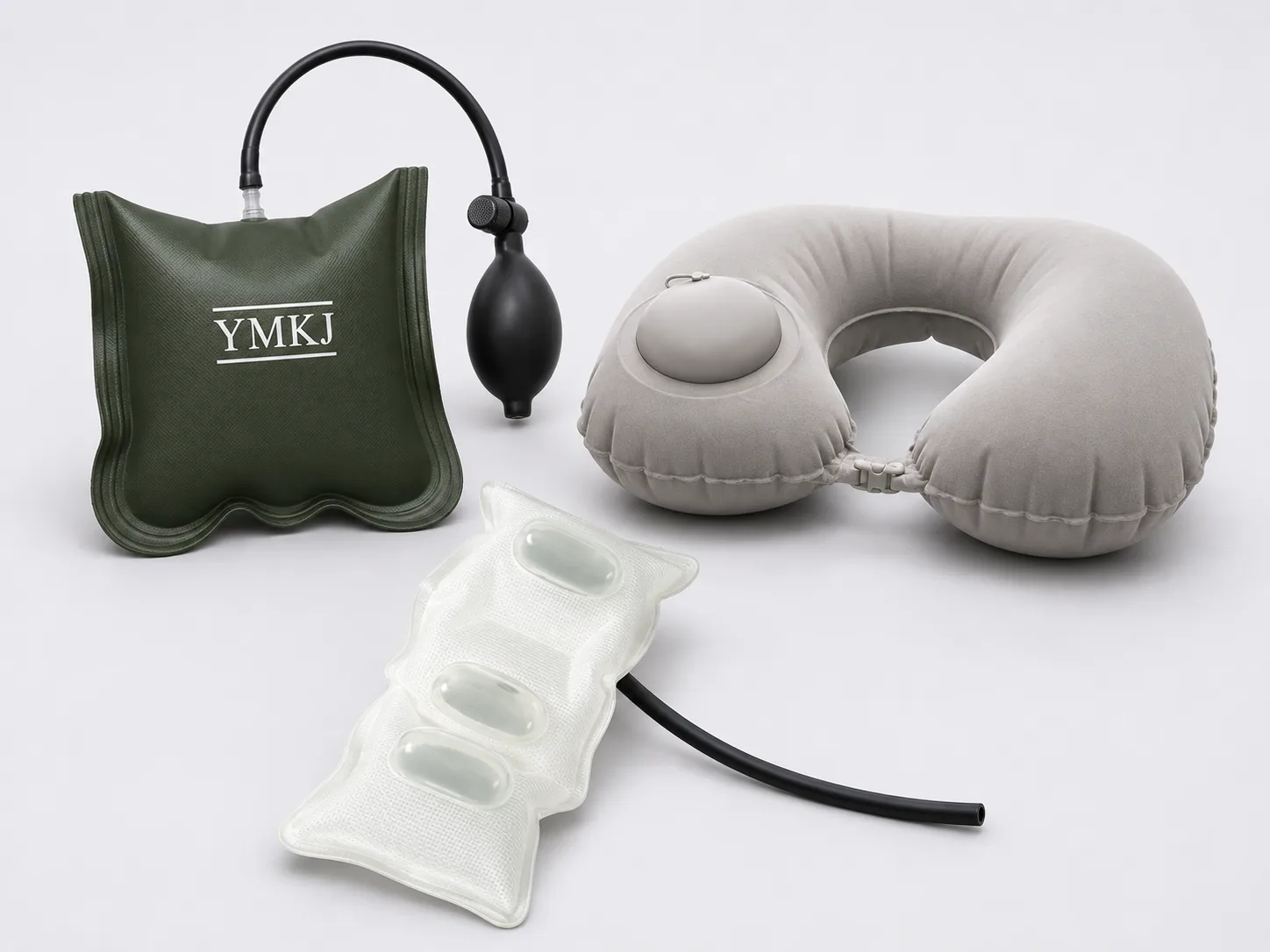
Review chamber placement, inflation sequence and the connection to the chair assembly.
Use the available space and required inflated profile to guide the design discussion.
Discuss the cell layout, inflation method, cover interface and intended application.
CUSTOM DESIGN OPTIONS
Dimensions, chamber arrangement and the inflated profile.
TPU film or laminated fabric: review the application and sample requirements.
Position, tubing and the interface to the inflation system.
Artwork, label content and the purchasing configuration.
Share what you know. Mark any details still open.
BEFORE YOU BEGIN
Start with the application, installation space and a reference image or sample. The initial review should identify which dimensions and interfaces need to be defined.
Material compatibility and manufacturing route need to be reviewed for the specific structure. Confirm the actual in-house and external process scope in the project discussion.
These depend on the structure, material, tooling, quantity and revision scope. Request a project quotation with clear assumptions and timing conditions.
Agree the sample version, drawings, material specification, acceptance requirements, quantity and commercial conditions before production release.
Share your application, drawing, or sample reference to help us understand your development requirements.
